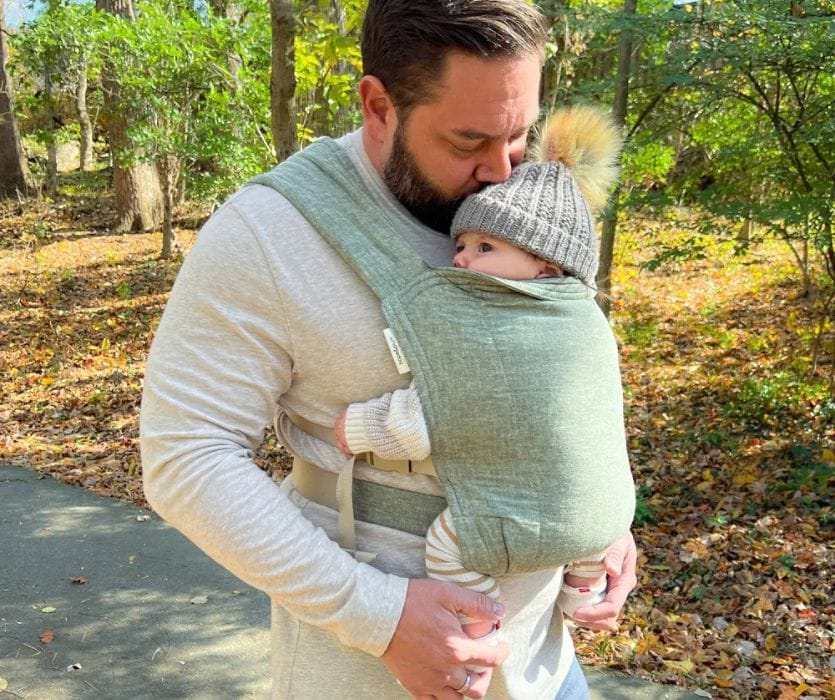
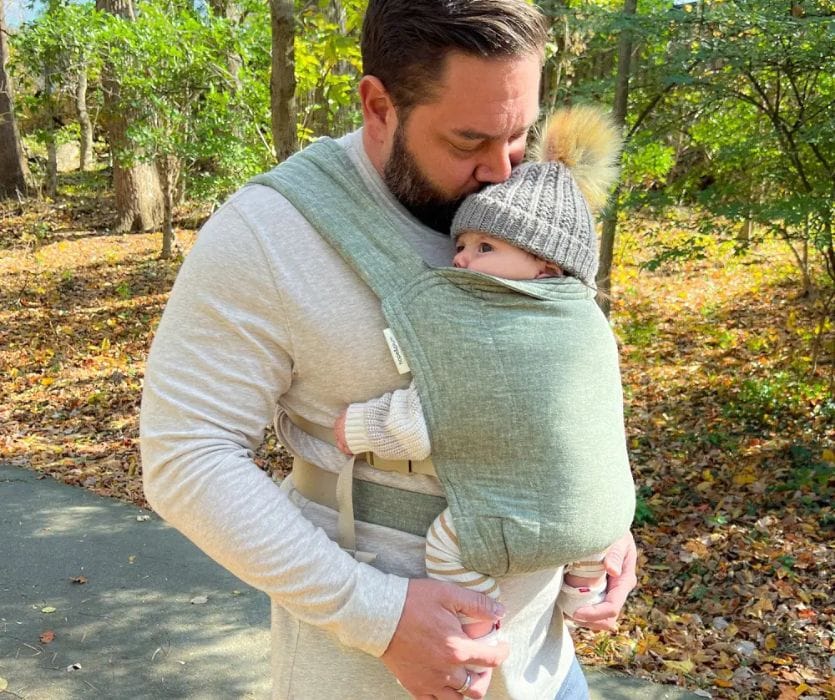
You’ve made it through the whole series. You know what a stretchy wrap is, you understand the difference between an H-back and an X-back, and you’ve learned that an onbuhimo is not, in fact, a type of sushi. Now comes the part everyone actually wants: just tell me what to buy.
Here’s the thing — there genuinely isn’t one right answer. But there are right answers for specific situations, and that’s what this post is for. Answer a few honest questions about your life, and the decision gets a lot clearer.
What you’ll find here:
- The questions worth asking before you buy anything
- Recommendations by situation
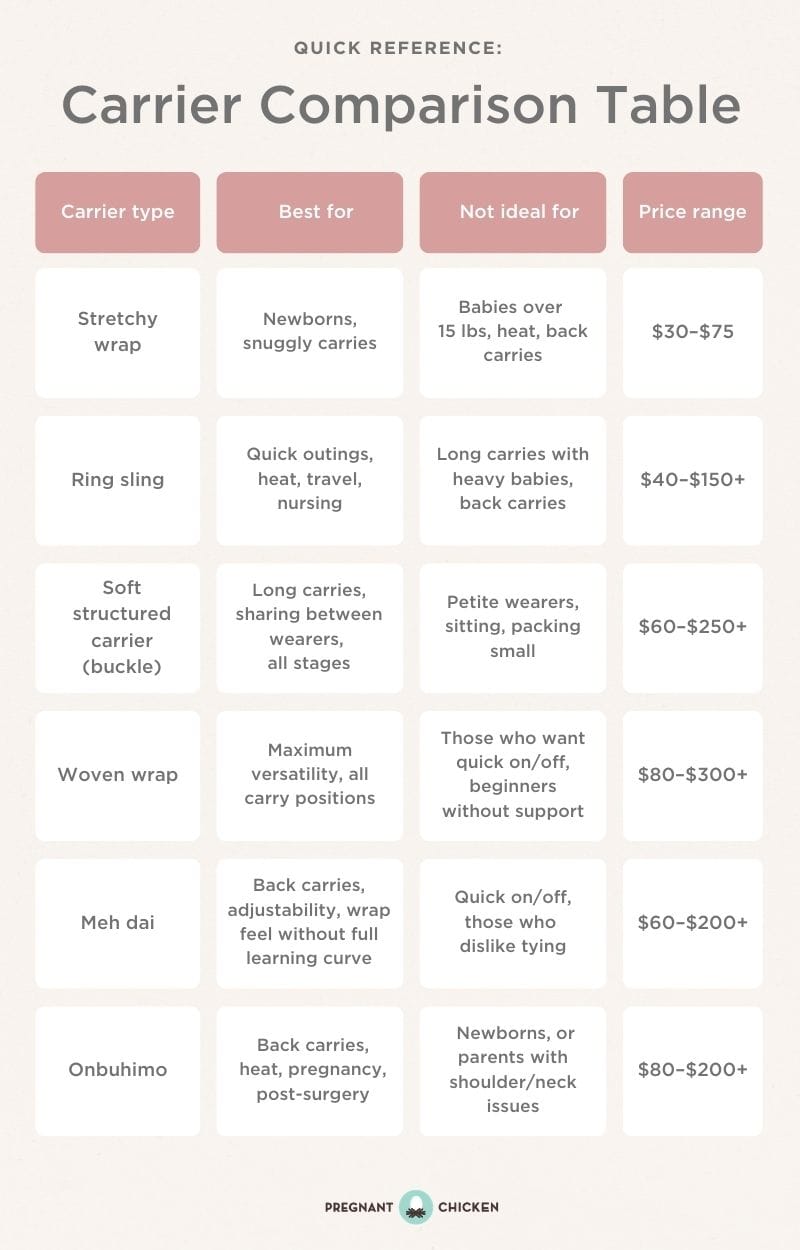
- A quick-reference carrier comparison table
- The smartest ways to buy
- What to do if your carrier isn’t working
Start Here: The Questions That Actually Matter
Before you look at a single carrier, answer these:
How old is your baby (or when are they due)? This matters more than almost anything else. A newborn has completely different needs than a six-month-old, and some carriers simply don’t fit safely until baby reaches a certain size or developmental milestone.
What’s your climate like? Heat is one of the most common reasons parents end up with a carrier they don’t use. Natural fibers in a hot climate make a real difference.
Will you be sharing the carrier with a partner? Some carriers are sized (meaning one size fits one person), and some adjust broadly enough to share easily. If sharing matters, this needs to be a filter.
What are you primarily using it for? Long walks and hikes have different requirements than quick grocery runs or working from home. Be honest about your actual life, not your aspirational one.
What’s your budget? A good carrier doesn’t have to be expensive — especially secondhand. But knowing your budget upfront keeps the decision focused.
How do you feel about a learning curve? Some people love learning a new skill. Others want to buckle and go. Neither is wrong, but they point toward different carrier types.
Recommendations by Situation
“I have a newborn and just need something that works right now.”
Start with a stretchy wrap or the Ergobaby Embrace. Both are soft, snuggly, and genuinely well-suited to the newborn stage. The stretchy wrap has a learning curve but is more affordable and versatile. The Embrace is faster to put on but has a shorter lifespan.
If you want to skip the newborn-specific carrier and go straight to something that grows with your baby, the Tula Free to Grow and Ergobaby Omni Classic or Omni Deluxe both fit from birth without an insert and will take you well into toddlerhood.
For newborns in hot climates specifically, a linen ring sling or the Hope & Plum Sprout come up repeatedly as the most comfortable options.
“I want one carrier that grows with my baby from birth through toddlerhood.”
Tula Free to Grow is the most universally recommended option at an accessible price point. Fits from 7–45 lbs, widely available new and secondhand, works for a broad range of body types. Find it here.
LennyLamb LennyLight is a step up in quality and price — softer, more adjustable, and made from natural fibers. Worth the investment if budget allows. Find it here.
Kinderpack (Infant) is the top recommendation for larger babies or parents planning to carry for long periods. More of a specialty purchase but with a devoted following for good reason. Find it here.
If budget is tight, look for any of these secondhand before buying new. All three hold their resale value well, which means the secondhand market has good options at significantly lower prices.
“My partner and I want to share a carrier.”
Avoid sized carriers like the Baby K’tan. Almost everything else — buckle carriers, ring slings, woven wraps, meh dais — adjusts broadly enough to share between wearers of significantly different sizes.
The Tula Free to Grow, Kinderpack, and Hope & Plum Lark all come up frequently as carriers that work well for wearers of very different sizes without significant readjustment time.
“I live somewhere hot and humid.”
Prioritize natural fibers — linen, cotton, hemp — over synthetic materials or heavily padded carriers. A few honest truths here: babywearing will always be warm, and there is no magic carrier that makes it completely cool. But the difference between a linen ring sling and a padded synthetic buckle carrier in July is real and significant.
Top picks for heat: linen ring sling (Hope & Plum, Girasol, or LoveHeld), Happy Baby OG in linen, Hope & Plum Lark (hemp-cotton blend), or Kinderpack with cool knit mesh.
Avoid: all-mesh synthetic carriers (counterintuitively hotter than natural fibers), heavily padded SSCs, and stretchy wraps with multiple layers in direct sun.
“I want something quick and packable for outings and travel.”
Ring sling — rolls up to almost nothing, goes on in seconds, works from newborn to toddler. The single best answer for parents who want something that’s always in the bag. Find one here.
Hope & Plum Lark — folds down much smaller than most SSCs, apron waist is comfortable for sitting, and easy to share between wearers. Find it here.
Happy Baby OG — lightweight, folds to almost nothing, and highly regarded for comfort on longer outings. Find it here.
Integra Solar — comes up specifically for travel: water resistant, packs tiny, has a hood, and dries quickly. A niche pick but worth knowing about if you travel frequently. Find them here.
For flying specifically: a ring sling is the most practical airport carrier — fast on and off, doesn’t take up luggage space, and works at the gate, on the plane, and everywhere in between. TSA procedures vary — be prepared to remove your baby from the carrier at security, though whether the carrier itself needs to come off depends on the screening method. Check current TSA guidelines before you fly rather than assuming either way.
“I have back pain or physical limitations.”
Look for carriers that distribute weight evenly across both shoulders and your waist. A well-fitted buckle carrier with a proper waistband — Tula Free to Grow, Kinderpack, or LennyLamb LennyLight — is generally the most comfortable option for parents with back issues.
Avoid ring slings for long carries if one-shoulder weight is a concern. Avoid onbuhimos if shoulder or neck issues are a factor.
If you’ve had a c-section and find waistbands uncomfortable in the early weeks, the Ergobaby Embrace or a ring sling avoids pressure on your incision while you recover. The Hope & Plum Lark’s apron waist also sits differently than a traditional waterfall waistband and is more comfortable for many post-surgical parents. That said, always follow your care provider’s guidance about activity after surgery before using any carrier.
Getting a proper fit check is especially important if you have back or physical issues — a carrier that’s even slightly off can make pain worse rather than better, while the same carrier correctly fitted can make a real difference.
“I’m petite and worried about fit.”
This is a genuine concern and worth taking seriously. Heavily padded buckle carriers with rigid waistbands are the most likely to cause fit issues for smaller frames — buckles can fall in awkward spots and waistbands may not tighten down far enough.
Carriers that tend to work better for petite wearers: ring slings (infinitely adjustable, no rigid structure), Hope & Plum Lark (apron waist sits differently than a waterfall waistband), Happy Baby OG (minimalist, adjustable), and meh dais generally (fabric ties rather than fixed hardware).
If you’re petite and want a buckle carrier, the Kinderpack and Tula Free to Grow come up positively in petite parent communities more often than the Ergobaby line.
Trying before buying is especially important here. What looks promising in photos may sit completely differently on a smaller frame.
“I want to be able to do back carries.”
You need a carrier that explicitly supports back carries — not all do. Good options depending on your experience level:
For beginners: Tula Free to Grow, Kinderpack, or Hope & Plum Lark — all support back carries in a buckle or buckle-adjacent format that’s accessible without prior experience.
For those comfortable with some learning: A meh dai allows back carries earlier than most SSCs and gives more adjustability. The Girasol WrapMySol and LennyLamb Wrap Tai are frequently recommended starting points.
For the high back carry specifically: An onbuhimo is the best tool for the job once baby can sit supported. The Kinderpack, LennyLamb, and Naked Panda onbuhimos come up most often.
For maximum versatility: A woven wrap opens up more back carry positions than any other carrier type, but comes with the steepest learning curve.
“Budget is a real concern.”
Good news: you don’t need to spend a lot to babywear safely and comfortably. A few approaches that work:
Buy secondhand. Baby carriers hold their resale value well, which means the secondhand market is full of quality options at significant discounts. Facebook buy/sell/trade groups, Mercari, Poshmark, and eBay are all worth checking. Brands like Tula, Kinderpack, and Hope & Plum are frequently available used.
Start with a stretchy wrap. New stretchy wraps from reputable brands (Boba, Moby) are available for $30–$50 and will serve you well through the newborn stage.
Look for mislisted items. Carriers are frequently mislabeled on Marketplace — a Tula Free to Grow listed as a “Tula standard,” a Kinderpack listed generically as a “soft structured carrier.” If you find something and aren’t sure, ask to see the tag with weight and model information before buying.
Check consignment stores. Once Upon a Child and similar consignment shops sometimes have quality carriers mispriced or misidentified. Worth a look if you have one locally.
The Smartest Ways to Buy
Try before you buy. Truly, this is the single best thing you can do before spending money on a carrier. Look for a local babywearing group or a baby boutique that does fittings. If in-person isn’t possible, several companies offer try-before-you-buy programs by mail.
One note on this: if you’re lucky enough to find a knowledgeable person at a store who spends real time helping you figure out what works for your body and your baby, please buy your carrier from them. Tapping into someone’s expertise and then heading straight to Amazon to save twelve dollars is the kind of thing that closes good local baby stores. And nobody wants that.
Buy secondhand strategically. For fabric carriers with no hardware (stretchy wraps, ring slings, woven wraps), secondhand is an excellent option — there’s nothing to wear out. For buckle carriers, check that all buckles click securely, stitching is intact, and there are no signs of significant wear before buying.
Use retailers’ return windows thoughtfully. If you’re truly unable to try anything in person, ordering from a retailer with a generous return policy lets you experiment at home. Just be disciplined about actually returning what doesn’t work.
Start with one. It’s tempting to buy a newborn carrier and a grow-with-you carrier and a ring sling before your baby arrives. Most experienced babywearers will tell you: start with one, learn it well, and add from there based on what you actually find yourself needing.
What to Do If Your Carrier Isn’t Working
Before you give up on a carrier, try these things:
Get a fit check. Post a photo or video to a babywearing community — Reddit’s r/babywearing, Facebook babywearing groups, or directly to many brands who offer free fit consultations. A surprisingly high percentage of “this carrier doesn’t work” situations are one adjustment away from working perfectly.
Give it more than one try. Most carriers feel awkward the first few times. This is normal. Give yourself at least a week of regular attempts before deciding something isn’t for you.
Check the basics using the TICKS guidelines. The babywearing community uses this acronym as a quick safety checklist for any carrier.
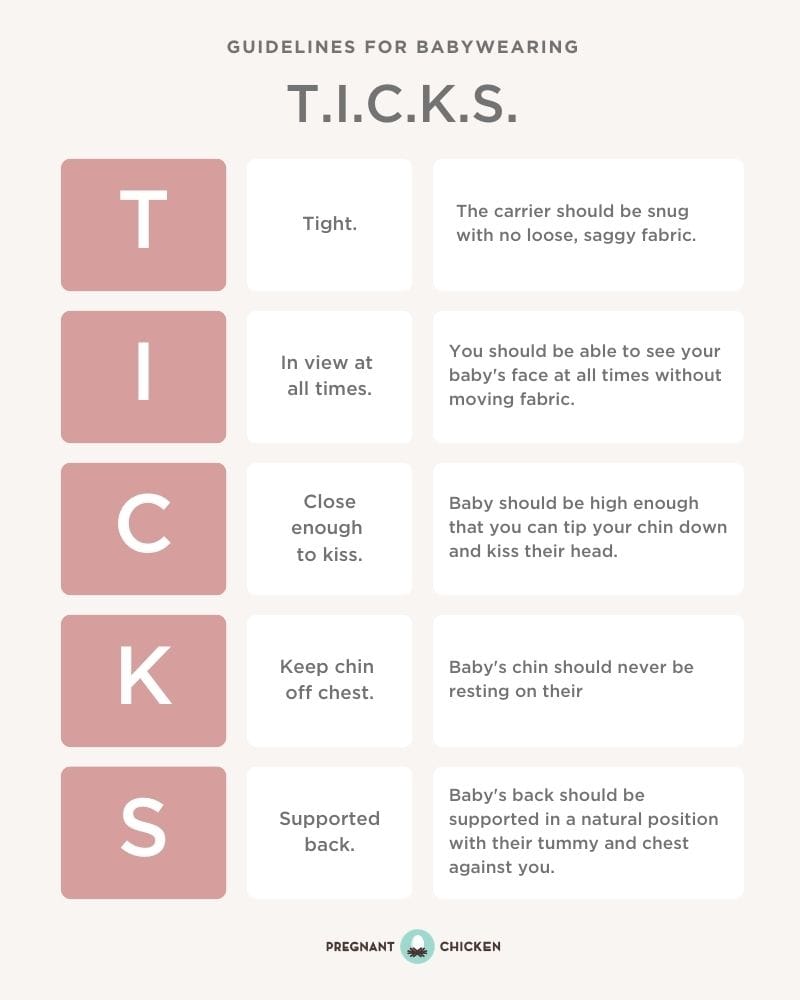
Running through these five checks catches the vast majority of fit issues and takes about ten seconds once you know them. (Personally, it drives me nuts that ‘c’ doesn’t stand for ‘chin off chest’ and ‘k’ doesn’t stand for ‘kissable head’, but I guess as long as we get there, it doesn’t matter what road we take.)
Consider that it might genuinely not be right for your body. Sometimes a carrier that works beautifully for most people just doesn’t fit your specific body well. That’s not a failure — it’s just fit, the same way jeans fit differently on different people. Resell it and try something else.
One Last Thing
If you take nothing else from this guide, take this: the carrier that works is the one that gets used. Not the one that got the best review, or the one your sister swears by, or the one that looks most impressive on a registry. The one that fits your body, suits your baby, and actually makes it out of the house with you. Everything else is just research. Go find yours.
The Full Series
- Overwhelmed by Baby Carriers? Here’s Where to Actually Start
- The Beginner’s Guide to Soft Structured Carriers
- Stretchy Wraps Are Magic for Newborns — Until They’re Not
- Ring Slings: What They Are, How They Work, and Why Parents Love Them
- Beyond the Buckle: A Guide to Woven Wraps and Meh Dais
- What Is an Onbuhimo? Everything You Need to Know About This Underrated Carrier
This post may contain affiliate links. If you purchase through my links I may earn a small commission at no extra cost to you. Thanks for supporting Pregnant Chicken — it keeps the lights on and supports our free content. Updated February 2026.