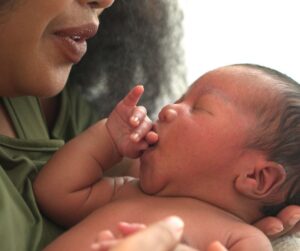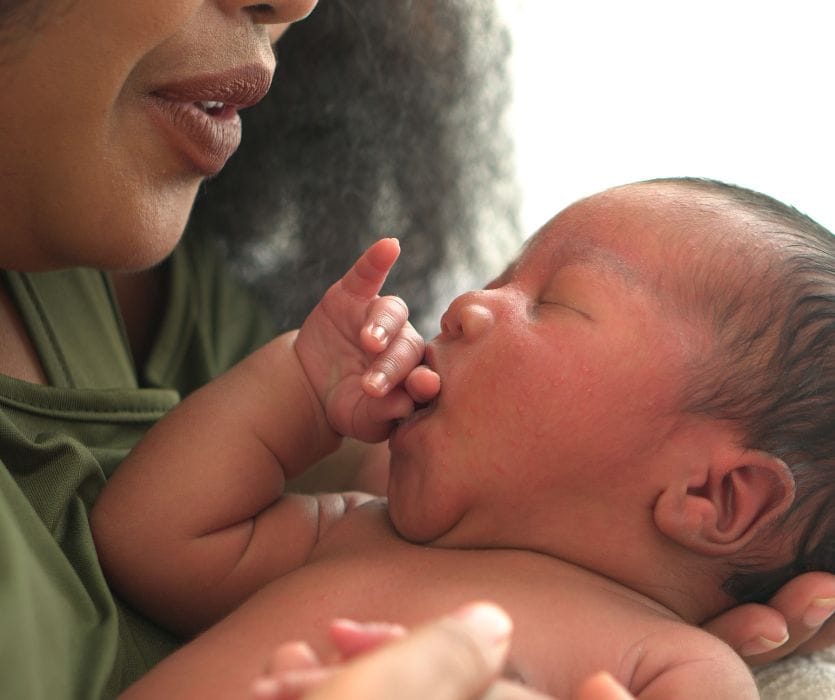
Look, we get it, babies are cute. Those sweet cheeks, that sweet baby smell, those tiny fingers wrapped around yours – it takes everything not to smother them with kisses. (They really are yummy.)
But a baby’s immune system is brand new, like, literally just unpacked from the box. What reads as a minor sniffle to you could land a newborn in the hospital.
Let’s break down exactly why those kisses need to wait, and why baby kisses are riskier than you think.
It All Comes Down to Germ Transfer
When someone kisses a baby – especially on or near the face – they’re potentially transferring bacteria and viruses that their adult immune system handles just fine, but a baby’s developing system can’t fight off yet.
The even trickier part is that many people don’t even know they’re contagious.
The relative who “just has allergies”? Could be early RSV. The neighbor who had a cold last week and feels fine now? Still potentially shedding virus. That friend who swears they never get cold sores? They might carry HSV-1 without symptoms.
The risk isn’t a baby getting a little sniffly. We’re talking about serious infections that can affect their brain, lungs, and other vital organs during those first months when they’re most vulnerable.
The 4 Biggest Risks When Someone Kisses a Newborn
1. RSV (Respiratory Syncytial Virus)
This is the big one, especially right now. A 2024 study that followed over 2.3 million children born in Sweden found something shocking: even healthy, full-term babies with no underlying conditions ended up in intensive care with severe RSV.
The median age of the sickest babies? Just under two months old.
For adults, RSV symptoms are so mild you might think it’s just a stuffy nose or slight cold. But for babies, RSV can mean:
- Difficulty breathing and rapid breathing
- Severe dehydration
- Hospital admission (2.8% of RSV-infected infants were hospitalized)
- ICU stays with oxygen support
- In rare cases, death
Babies born in winter months or those with siblings under 3 have a threefold higher risk, and prevention is infinitely easier than treatment.
The good news: RSV hospitalizations have dropped since vaccines became available. But that doesn’t mean a baby is automatically protected – especially in those first vulnerable months.
2. Herpes Simplex Virus (HSV-1)
About 67% of adults under 50 carry HSV-1, the virus that causes cold sores. Many don’t even know they have it because they’ve never had an outbreak.
Here’s what makes it brutal for newborns: you can spread herpes even without an active, visible cold sore.
When a newborn contracts HSV-1, it’s not just a blister on their lip. The virus can:
- Spread to their eyes, potentially causing vision problems
- Attack their central nervous system, leading to brain damage
- Cause herpes meningitis (inflammation of the brain and spinal cord membranes)
- Become life-threatening if it reaches their organs
- Leave permanent intellectual disabilities
We’ve all heard heartbreaking stories and the younger the baby, the more vulnerable they are. The first four weeks are the highest risk period, but you should curb the kisses for at least the first three months.
3. Hand, Foot, and Mouth Disease
This viral infection is incredibly common in daycare settings and among young children, but it’s easily spread to babies through kissing or close contact. While it sounds relatively benign, HFMD causes:
- Painful ulcers and blisters in and around the mouth
- Rashes on hands, feet, and diaper area
- Fever and irritability
- Difficulty eating and drinking (which can lead to dehydration in infants)
As with many of these treats, someone can spread HFMD before they show any symptoms. So that well-meaning toddler who kissed a baby’s hands yesterday? They might develop blisters tomorrow, but that baby could already be infected.
4. Their Barely-There Immune System
Let’s talk about what’s actually happening inside a newborn’s body. For the first three months of life, babies have significantly fewer infection-fighting immune cells – specifically neutrophils and monocytes – compared to older children and adults.
Think of it this way: their immune system is like a security team that’s severely understaffed. They’re doing their best, but they’re easily overwhelmed.
Bacteria that normally live harmlessly in an adult’s body (like Group B streptococci (GBS) from the gastrointestinal tract or certain E. coli strains) can cause:
- Sepsis (blood infection)
- Pneumonia
- Meningitis (inflammation of brain and spinal cord membranes)
These aren’t “baby got a cold” situations. These are “rush to the emergency room” scenarios that can have life-threatening consequences.
What About Parents Kissing Their Own Baby?
Great question. Parents can generally kiss their baby because:
- They’re in constant contact anyway
- They share the same household germs
- They’re hyper-aware of their own health status
So What Can You Do Instead?
The good news: there are tons of ways to bond with and show love to a new baby that don’t involve face kisses.
Great alternatives:
- Hold their tiny hand or foot
- Snuggle them close (after washing your hands)
- Talk to them – babies love hearing different voices
- Give gentle head pats or back rubs
- Just be present – your company matters more than your lips on their face
The golden rules for visiting:
- Wash your hands when you arrive
- If you’ve been even slightly sick in the past week, reschedule
- If you have any active cold sore or feel one coming, definitely reschedule
- Save the face kisses for when baby’s older
The Bottom Line: Their Baby, Their Rules
Parents don’t need to justify protecting their baby.
Anyone who truly cares about that child’s wellbeing won’t be offended by being asked not to kiss them. And if they are? That’s their problem, not the parents.
That baby will have their entire life ahead of them for kisses from loving family members. Right now, during these vulnerable first months, everyone’s job is to protect that developing immune system.
There are a million ways to show love to a baby that don’t involve putting your mouth on their face. Anyone who can’t respect that can kiss an ass instead.
Also check out: Everything You Need to Know Before Visiting a Newborn